Saturday, July 11, 2015

Our 2015 Curriculum Selection using Catholic Schoolhouse

I am finally back on the blog!  I have been so busy the past two years working hard to build content over at Catholic Sistas's Homeschooling Series that I had abandoned this blog.  Sorry about that.  I did try to keep in touch through the Facebook page and Pinterest pins but I know it is not the same.  After much thought, I have decided to continue blogging about our new found love for Catholic Schoolhouse, a Catholic Classical approach to education.  It is lovely, think of the one room school house but in your home and Catholic!  I blogged about our decision to use Catholic Schoolhouse at Home last month over at Catholic Sistas under Raising Saints. 

This year we will be using Year 2 which involves Creation until the 1500's.  I am very excited to share my book selection for this year to come. 

This is the Year 2: Creation to 1500s Tour Guide.  This guide is a 24 week detailed guide to teaching History, Geography, Religion, Latin, Math, Language Arts, Fine Arts, The Orchestra and Art.

Here are the additional materials I am using to help me teach all four children
ages 5, 7, 9, and 10 together.:


The CSH History Cards are fantastic.  On one side there is a picture of a historical event, on the back is the title and a gist of the event.  While you can just teach from this I like to add activities and resource books for further investigation.  

My textbook spine for History this year will be Founders of Freedom from the Land of Our Lady series.  I am using Kolbe Academy's Answer key as well.


I use the History Pockets on our notebooking composition books.  :)  There is clearly much more in these books than what we will actually use.

This book has activities for the children to make and do.  I am using Classical Kids as a resource for lesson planning.  


Ancient Egyptians and their Neighbors: An Activity Guide


Additional Resources:

The Real Vikings
Barbarians!
Celts (Usborne)
Nordic Gods and Heroes
Aztecs (Usborne)


The Kingfisher Book of Ancient Worldfrom the Ice Age to the Fall of Rome


Pyramid
Tutankhamun
The Penguin Historical Atlas of Ancient Egypt
Jason and the Golden Fleece
The Pharaoh and Ancient Egypt
Tut's Mummy: Lost...and Found
Discovering Ancient Treasures


See Inside Ancient Rome (Usborne)
Ancient Rome
Roman People


Ancient Greece: Facts, Stories and Activities
Illustrated Guide to Greek Myths & Legends (Usborne)
Ancient Greeks (Usborne)
The Greeks: Crafts from the Past 


The Medieval WorldWorld History: Medieval World (Usborne)
Castle: How It Works


Oxford Children's History of the World
A Child's History of the World
(warning: this book is from a Protestant perspective, I use it as a form of apologetics with my children)


Oxford Children's History of the World: The Ancient World


This is the Science (HANDS ON) Guide for year 2.  I love this guide because I do not really love Science BUT my children do and it helps me pretend like I do - hahaha!  Well I should say I do like to read about Science (as a Reading Specialist I better like that huh?) but the hands on part I am normally horrible on.  Since we started using CSH, we do hands on science!  YAY!  

Here are some of the resources I will be using for this coming year:

The Usborne Illustrated Dictionary of Physics
The Usborne Illustrated Dictionary of Chemistry


Hidden Stories of Plants
The Visual Dictionary of Plants
DK Plants
DK Tress
Handbook of Nature Study
The Reason for a Flower
Plants that Never Ever Bloom
Peterson First Guides: Trees


The Usborne Internet-Linked Library of Light, Sound & Electricity


Wonder Why: Stars Twinkle
Reader's Digest Pathfinders: Space
The Visual Dictionary of the Universe
The Usborn Internet Linked Library of Science Earth and Space
DK Visual Encyclopedia of Space


Another amazing product by CSH, Their Art Guide for Year 2, which follows what we will be learning in History!  Perfection!

Here are some additional resources for Art:
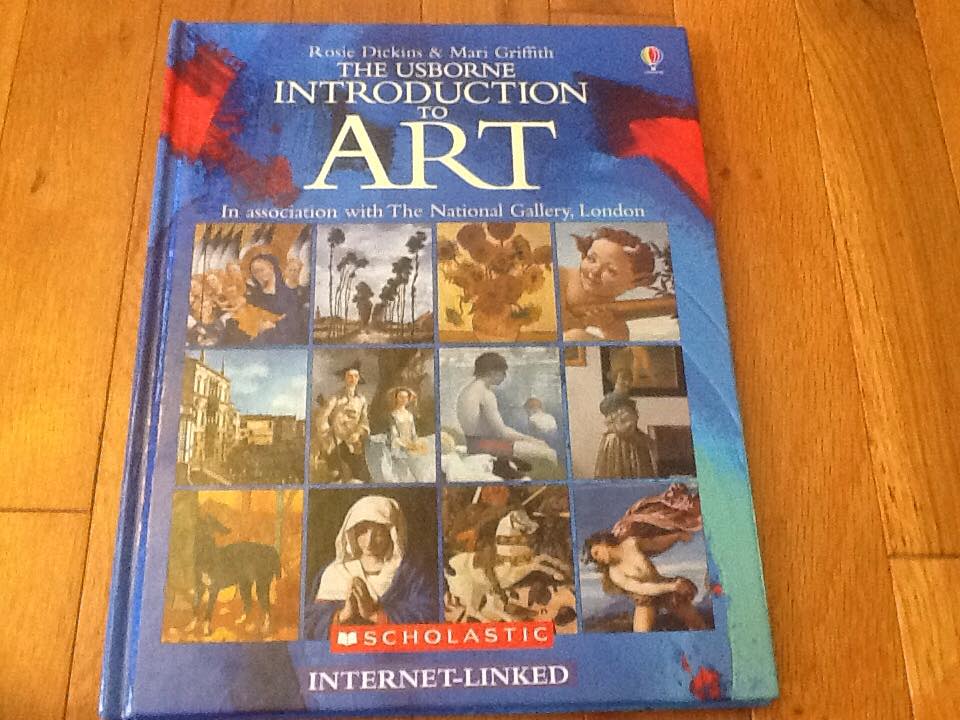
The Usborne Introduction to Art


Draw and Write through History: Greece and Rome
Draw and Write through History: The Vikings, Middle Ages and Renaissance 
Draw and Write through History: Creation through Jonah


The Young Person's Guide to the Orchestra
Meet the Orchestra

Meet the Orchestra: A guide to the instruments of the orchestra through star constellations and Greek Myths


The Story of the Orchestra


Kites Sail High: A Book About Verbs
Mine, All Mine: A Book About Pronouns
Fantastic! Wow! and Unreal!: A Book About Interjections & Conjunctions
Merry-Go-Round: A Book About Nouns
Many Luscious Lollipops: A Book About Adjectives
I and You and Don't Forget We: What is a Pronoun?
Dearly, Nearly, Insincerely: What is an Adverb?


To Root, To Toot, Parachute: What is a Verb?
Hairy, Scary, Ordinary: What is an Adjective?
A Mink, a Fink, a Skating Rink: What is a Noun?


Grammar Tales: Teaching Guide
Grammar Tales Readers Box Set


In addition to the individual Religion lessons, we will be using these books to compliment the Memory Verses/Songs that go with the CSH program:

Great Moments in Catholic History
Treasure and Tradition: The Ultimate Guide to the Latin Mass
Sermons
The King of the Golden City
The Incredible Discovery of Noah's Ark
Great Bible Stories
Read Aloud Book of Bible Stories
Bible History
The Holy Sacrifice of the Mass


St. Benedict: Hero of the Hills
Saint Dominic and the Rosary
Saint Paul the Apostle
Saint Joan of Arc
Saint Louis and the Last Crusade (not pictured)


Aside from using Catholic Schoolhouse at home, we are adding a Math, Writing, Reading, Religion, Grammar, and Spanish text to our schooling.  I will present them to you one by one by grade:


My fifth grader will be working closely with my fourth grader with some exceptions. He is using Living through God's Gifts for religion, American Cardinal Reader Book Five for Reading, all the other books are the same as his sister, except that in Math he will be further ahead than her in this book....as well as the Intermediate Language lessons because he stated these last year. They do share books so they have to coordinate using them at different times of the school day.


My fourth grader's books, she is using Intermediate Language Lessons for Grammar, Ray's New Intellectual Arithmetic for Math, American Cardinal Reader Book Four for reading, Living for God for a religion and Learn Spanish with Grace for Spanish. She also uses All about Spelling (not pictured)

Lingua Mater: Intermediate Language Lessons
Living for God
Learn Spanish with Grace
American Cardinal Readers Book Four
Ray's New Intellectual Arithmetic
All About Spelling 4 (not pictured)


Writing & Rhetoric: Book 1, Fables
Writing & Rhetoric: Narrative I
Writing & Rhetoric: Narrative II


This is the set my second grader is using. For Grammar he is doing Primary Language lessons, for reading he is using American Cardinal Readers Book Two, for Math he is using Ray's New Primary Arithmetic with the Classical Curriculum workbooks which there are four but I bought only the first two and come mid year I will buy the next two. For Spanish he and my first grader are using the Coquito Classico books found on Amazon. For religion he uses Living by God's Law in preparation for FHC.


Ok this is my first grader's books. For Spanish he will work with my second grader using the Coquito book, for Math he too is using Ray's primary Arithmetic but using the Series One work books. For Grammar he is using Voyages in English 1 and 2, for Reading I use American Cardinal Readers Book One to read to him, and for Phonics he is using Little Angel Readers A-D, for a Religion he is using Living in God's Love. He is using All About Spelling 1 for spelling.

Little Angel Reader A & Workbook A
Little Angel Reader B & Workbook B
Little Angel Reader C & Workbook C
Little Angel Reader D & Workbook D
Living by God's Love
Coquito Classico Spanish
American Cardinal Readers Book One
Ray's Primary Arithmetic text
Classical Curriculum Arithmetic Workbook Series 1, Book 1
Classical Curriculum Arithmetic Workbook Series 1, Book 2
Classical Curriculum Arithmetic Workbook Series 1, Book 3
Classical Curriculum Arithmetic Workbook Series 1, Book 4
All About Spelling 1 (not pictured)


Using Catechism in Rhyme, I have written a 100 page handwriting, copy work, and dictation book for my children to use.  I also have it available for sale, if you are interested, contact me through Facebook or via email: RaisingLittleSaints (at) gmail.com.  Here are the details:


As an Associate to Amazon, all links about when purchased, give me a commission.  It does not affect the price you pay for the product.  Thank you for your patronage. 


Friday, November 14, 2014

a Spoonful of Russian 032

Today I fill a request of one of my Podcast listeners/ YouTube subscribers by reciting a short poem written by one of Russia's greatest talents - Anna Akhmatova. Лотова Жена - Анна Ахматова (Lot's Wife - Anna Akhmatova). To view the text: http://youtu.be/2fEWD9bqAWk

Tuesday, November 4, 2014

Five Patron Saints You Didn't Know About


"Man is not perfectly happy, so long as something remains for him to desire and seek." ~ Saint Thomas Aquinas


Thomas Aquinas knew what it meant to be happy. He knew that it meant to no longer be seeking or desiring anything else. He knew that meant you needed to be with God, next to Him, face-to-face. Thomas, as well as the over 10,000 other patron saints, are all perfectly happy. Having sought after and fulfilled their destiny by now being face-to-face with God, each patron saint has the ability to intercede on our behalf. Being face-to-face with God gives them the unearthly ability to hear our prayer, take it directly to God, and pray along with us.

In each of life’s circumstances we have a patron saint there for us. St. Patrick of Ireland, St. Valentine of love and happy marriage, and St. Christopher the patron saint of travelers are amongst some of the most well known patron saints, but what about those we are less familiar with?

All Saints day is November 1, and what better way to celebrate and commemorate their lives than to discover a few new patron saints that may be able to play an active role in our lives. Let’s take a look at 5 patron saints that may not be as well known, but may play an important role in our lives:

  1. St. Isidore of Seville – Isidore is best known for his work in education and writing an encyclopedia used as a textbook in classrooms for many years. He believed in harnessing the knowledge of the world for the glory of God. He has been suggested as the patron of the Internet.
  2. St. Apollonia – Apollonia became a martyr after throwing her body in a fire when told to curse her God. Just before her death, she had been beaten and all of her teeth knocked out. Thus, she became the patron saint of dentists and toothaches.
  3. St. Jerome Emiliani – Known for establishing a congregation dedicated to the care of orphans and the education of youth. Jerome is the patron saint of orphans and abandoned children.
  4. St. Rita of Cascia – Rita was forced to marry at a young age, keeping her from her desire to become a nun. The man she married was cruel, and later died, along with her sons. Rita later became a nun working in prayer and charity. She is the patron saint of difficult marriages and parenthood.
  5. St. Aloysius Gonzaga – Aloysius suffered from kidney health problems from a young age. Knowing he wanted to be a priest he studied the saints. After a vision from the Archangel Gabriel, he learned of his imposing death within the year. He was ordained a deacon at the age of 20, but was never able to become a priest. He is the patron saint of teenagers and Christian youth.

Whether you are suffering from an obscure neurological disorder, are in the field of acting or advertising, leaving soon for college, living in England or Uruguay, or are a member of the military, take comfort in knowing there is a patron saint that is able and willing to intercede on your behalf. 


GUEST POST WRITTEN BY: Jessica Doran Haas of St. Patrick's Guild


Friday, October 24, 2014

Enjoy your Spoonfuls?

Enjoying the podcast? Got a minute? Please, add your iTunes review for my podcast.

It is currently buried underneath 40 or so other foreign language podcasts. Let's put it on the front page! More votes, more exposure, more content. Thank you in advance.

Click to add your vote/review


Monday, October 20, 2014

a Spoonful of Russian 031

The video that goes with this episode can be found on my YouTube channel: Episode 031

Toasting is a huge thing in Russia. Has been for ages. A full glass must be drunk to the bottom after every toast, because “a toast without wine is like a wedding without a bride!” A traditional Russian drinking party usually includes a sequence of several standard toasts.


You can refresh them by watching my Most Common Russian Drinking Toasts/Phrases video.


The most common first toast is...

To our meeting!
За встречу!
[za FSTRYE-tchoo] … sort of an ice-breaker toast:)


Another good opener toast is…


To our health!
Будем здоровы!
[BOO-dem zda-RO-vy]


The toasts that follow largely depend on the occasion that brought the people together. At a birthday party, the first toast (with wishes of health, success and a long life) is usually to the birthday guy or lady. The second toast is to their parents as a sign of honor.

At a wedding, the first toast is “To the health of the newlyweds.” After that, the guests shout "Горько!"(Gorko!) often and loudly, all through the banquet. “Gorko” literally means "bitter” in Russian, implying the bitterness the wine being drunk. By yelling that the wine is bitter, the guests are inviting the newlyweds to make it sweeter by giving each other a sweet long kiss. As the bride and groom kiss, the guests count the seconds: “Один! Два! Три! Четыре! Пять! ... One, two, three, four, five..." until the kiss is over, whereupon they raise their glasses in a toast.

At a funeral banquet, the first part of the toast is usually an uplifting or touching story about the dearly departed; it is concluded with the words Пусть земля ему/ей будет пухом! Вечная память! (Let the ground in which he/she rests be like goose down. Eternal memory to (him/her). When people in Russia drink to the dead it is customary not to clink glasses.

Without a doubt towards the middle of the party someone usually proposes a toast “За женщин”! “To beautiful ladies!” or “To the ladies present here!" At this point someone else usually says that real men stand up when they drink a toast to beautiful ladies, and they drink to the bottom. All the gentlemen present promptly comply.

The last toast, “На посошок!” / “Na pososhok", is usually pronounced when the guests are about to leave. In olden days, travelers used a walking stick, called posokh or, diminutively, pososhok in Russian, during long journeys. A toast to the walking stick, therefore, is meant to make sure that the return journey is safe.

Learn some Russian today!

Tuesday, October 14, 2014

a Spoonful of Russian 030

The video that goes with this episode can be found on my YouTube channel: Episode 030

Asking questions in Russian can be quite a daunting and intimidating task, especially if you try to follow the proper grammar rules of declention, gender agrement, etc. What if you are a beginner? Should you not even try? Of course not.

By knowing basic Russian interrogatives, you'll be able to express your questions, even without an extensive vocabulary or grammar knowledge. Lots of times you don’t even need to form a complete sentence to ask a question. All you need is to know the ‘question word’ and your pointer finger:)

Learn some Russian today!


Wednesday, September 17, 2014

Saint Hildegard of Bingen Doctor of the Church


Guest post By Megan Hoyt

Hello friends of Hildegard! Happy Feast Day! And when I say Feast Day, I don’t just mean a celebration of the life of St. Hildegard of Bingen. I also want to share some of my favorite Hildegard recipes so you can create your own feast at home today with your children.

Here is a hearty Hildegard breakfast you can start your Feast Day with – Spelt Porridge. 
Many thanks to the kind folks at Marx Foods for this delicious recipe!

Baked Spelt Porridge with Vanilla, Huckleberries & Maple Sugar

Though it looks like one, this isn’t sweet enough to be a dessert. Instead it’s an incredible breakfast that can be served hot or cold, with or without milk. Baking it in the oven rather than stirring it on the stove gives it a denser texture and frees you from the stove.
Drink Pairing: Strong Cup of French Press Coffee

Ingredients: Makes 6 Servings

1 cup 
Cracked Spelt Cereal
4 tbsp Unsalted Butter
2 ½ cups Whole Milk
1 cup Water
1 tsp 
Tahitian Vanilla Extract (could substitute Bourbon Vanilla Extract)
1/3 cup 
Maple Sugar
1 pinch of Salt
1 tsp Orange Zest, microplaned or very finely minced

Sauce:

1 cup Wild Huckleberries (Fresh or Frozen)
¼ cup Maple Sugar
1 tsp Orange Zest

Optional: Micro Marigold Florets for garnish

Directions:

1. Preheat your oven to 350 degrees & rub an 8×8 baking dish with butter.
2. Melt the butter in a saucepan. Add the cracked spelt and toast it, stirring frequently, until fragrant and lightly browned.
3. Move the toasted spelt to a bowl and stir in the milk, 1 teaspoon of orange zest, vanilla extract, 1/3 cup of maple sugar, salt and water.
4. Pour the spelt mixture into the baking dish. Put the dish on a baking sheet or cookie sheet (just in case it bubbles over). Move the dish to the oven.
5. Bake for 35 minutes, then check the porridge – it will set up almost like a brownie when done.
6. While the porridge is baking, combine the huckleberries, remaining teaspoon of orange zest and the remaining ¼ cup of maple sugar in a small pot. Simmer until a thick sauce forms.
7. Serve hot or cold, with or without milk.
Note: This porridge can be frozen in the baking dish for later use. When you want to eat it, just move it to your refrigerator until thawed, then serve cold or reheated in the microwave.


Here is a recipe for Spelt Bread, if you are not a fan of porridge:

Spelt Bread

Ingredients (Original recipe makes 2 big loaves)
  • 8 cups spelt flour
  • 1/2 cup sesame seeds
  • 1/2 teaspoon salt, or to taste
  • 1 tablespoon blackstrap molasses
  • 2 teaspoons baking soda
  • 4 1/4 cups milk
Directions
  1. Preheat the oven to 350 degrees F (175 degrees C). Grease two 9x5 inch loaf pans.
  2. In a large bowl, mix together the spelt flour, sesame seeds, salt, molasses, baking soda and milk until well blended. Divide the batter evenly between the prepared pans.
  3. Bake for 1 hour and 10 minutes in the preheated oven, or until golden. Placing a tin of the same size over the top of the loaf while baking gives it a lovely crust.
Hildegard believed these cookies would bring joy to the heart and energy and vitality to the body. Here is her recipe:

1 ½ cups butter or shortening
3 cups brown sugar
2 eggs, well beaten
½ tsp salt
6 cups flour
2 ½ tsp cinnamon
2 ½ tsp nutmeg
½ tsp cloves
1 cup ground or chopped almonds
1. Cream shortening or butter and sugar together.
Mix dry ingredients in another bowl.
Add to creamed mixture.
Mix thoroughly, kneading as necessary to mix all the flour.
Make into rolls, then refrigerate until cold.
Slice rolls into thin cookies.
Bake at 375 degrees Fahrenheit
Enjoy!


Megan Hoyt is the author of Hildegard’s Gift, recently released by Paraclete Press. Check out her website for more fun ways to celebrate Hildegard’s life and Feast Day, including her special coded alphabet and coloring sheets from the book.


“Spelt porridge, spelt bread and spelt coffee constitute the ideal breakfast.”
                                                                                             –Hildegard of Bingen